
Leaving the dentist with a newly restored tooth is a great feeling. Whether you had a cavity repaired or a chipped tooth fixed, a composite (tooth-colored) filling is an excellent way to restore function and aesthetics to your smile. At Pearl Dental, we pride ourselves on using high-quality materials that blend seamlessly with your natural teeth.
While the procedure itself is routine, the care you take in the hours and days following your appointment plays a significant role in your comfort and the longevity of your restoration. To help you navigate your recovery, we have compiled this comprehensive guide on post-operative instructions.
Handling the Numbness
Immediately after your procedure, the most obvious sensation will be the lingering numbness from the local anesthetic. This is completely normal and ensures you feel no pain during the treatment. However, it does require some special attention once you leave our chair.
Protect Your Soft Tissues
When your lips, tongue, and cheeks are numb, your natural protective reflexes are temporarily turned off. It is surprisingly easy to accidentally bite your tongue or chew the inside of your cheek without realizing it until the feeling returns—and the pain sets in.
We strongly recommend that you avoid eating solid foods until the anesthetic has completely worn off. This usually takes a few hours.
Watch Your Temperature
You should also avoid hot beverages like coffee, tea, or soup while you are numb. Because you cannot sense heat accurately, you risk burning your mouth. Stick to room-temperature water or lukewarm drinks until full sensation returns.
A Note for Parents
If your child has received a filling, they will need extra supervision during this period. The sensation of a “fat lip” or “sleepy tongue” can be confusing or even amusing to children. They often try to scratch, suck on, or chew the numb area. This can lead to significant swelling and painful sores once the anesthesia wears off. Please keep a close watch on them to prevent any accidental self-injury.
Eating and Drinking
One of the major advantages of modern composite fillings is that they are fully hardened before you even leave the office. We use a special curing light to set the material instantly.
When Can I Eat?
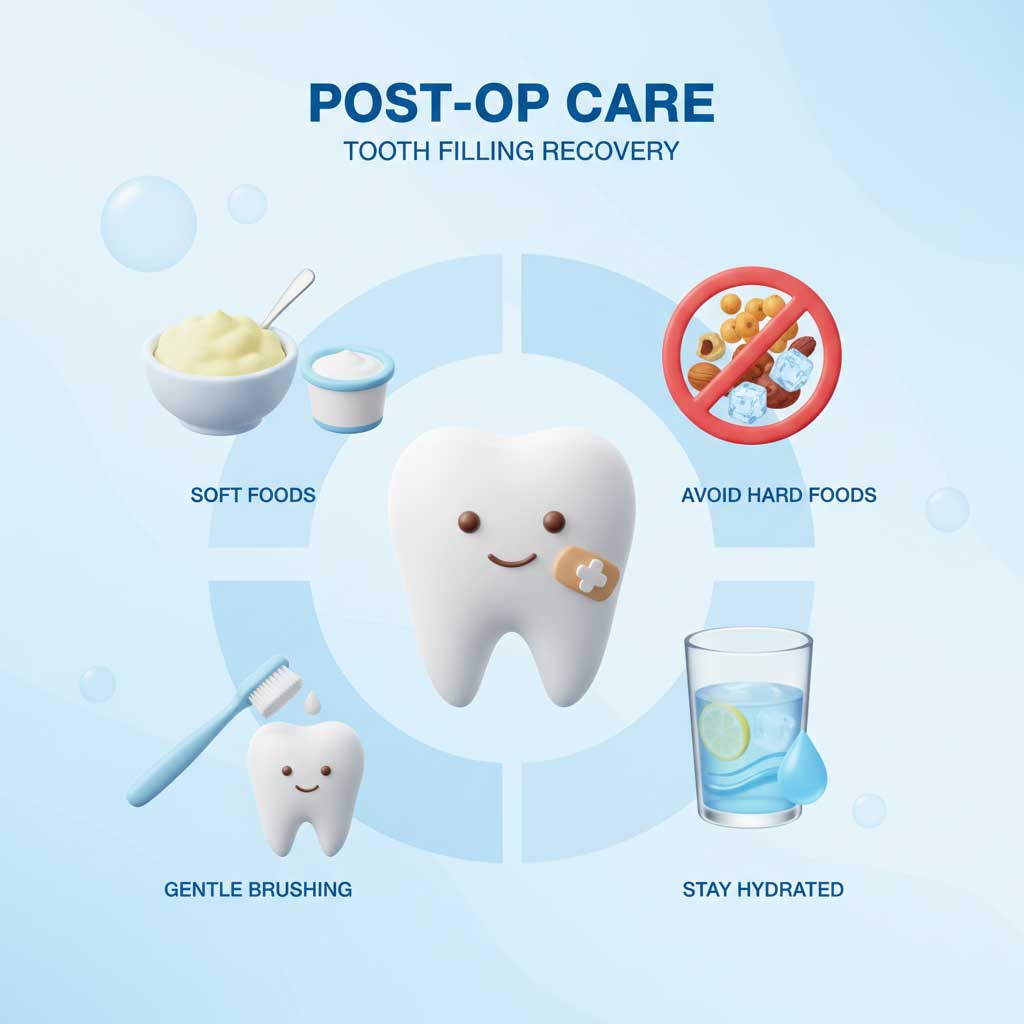
Technically, your filling is ready for action immediately. However, as mentioned above, we advise waiting until the numbness is gone to prevent biting accidents. Once the feeling is back, you can return to your normal diet.
Foods to Avoid
While your filling is strong, it—and your natural tooth—are not indestructible. To prevent fracturing the filling or the surrounding tooth structure, avoid chewing on excessively hard items.
- Ice cubes: Chewing ice is a common cause of tooth fractures.
- Hard candies: Biting down on these can exert tremendous force.
- Popcorn kernels: Unpopped kernels are notoriously dangerous for dental work.
- Nuts: Be careful with very hard nuts.
Managing Sensitivity
It is very common to experience some sensitivity after a filling. Remember, we have done work on a living biological structure.
Types of Sensitivity
You may notice that your tooth reacts to:
- Cold: Ice water or ice cream might cause a quick “zing.”
- Pressure: You might feel a little tenderness when biting down.
- Air: Breathing in cold air might be noticeable.
Generally, the deeper the cavity was, the more sensitive the tooth is likely to be. This sensitivity is usually temporary and should subside within a few weeks as the nerve heals.
How to Find Relief
If you are uncomfortable, over-the-counter pain relievers are usually sufficient. Ibuprofen (Motrin™, Advil™), Tylenol™, or aspirin can help alleviate the tenderness. If your sensitivity persists beyond a few days without improvement, or if it increases, please contact Pearl Dental.
Checking Your Bite
We meticulously check your bite before you leave the office, but because you are numb, it can sometimes be difficult to tell if it feels 100% natural.
Once the anesthetic wears off, pay attention to how your teeth come together.
- Does the filled tooth hit first when you bite down?
- Does it feel “high” or uneven?
- Is it painful to chew specifically on that tooth?
If you answered yes to any of these, your bite may need a simple adjustment. Do not wait for it to “wear down” on its own. Chewing on a high filling can bruise the ligament around the tooth, leading to prolonged pain. Call us for a quick, painless adjustment appointment.
Gum Soreness and Texture
You might also notice some tenderness in the gum tissue surrounding the tooth. This is usually due to the equipment used to keep the tooth dry and clean during the procedure. The injection site may also be sore. This kind of soft tissue irritation heals quickly, usually within a few days.
Additionally, your tongue is incredibly sensitive to texture. It might detect that the new filling feels smoother or slightly different in shape than your original tooth. This is normal, and your tongue will typically get used to the new surface within a few days.
We Are Here for You
Your comfort and long-term oral health are our top priorities at Pearl Dental. If you have any concerns about your recovery, if your bite feels off, or if you are experiencing persistent pain, please do not hesitate to contact our office. We are here to ensure your smile stays healthy, functional, and beautiful.